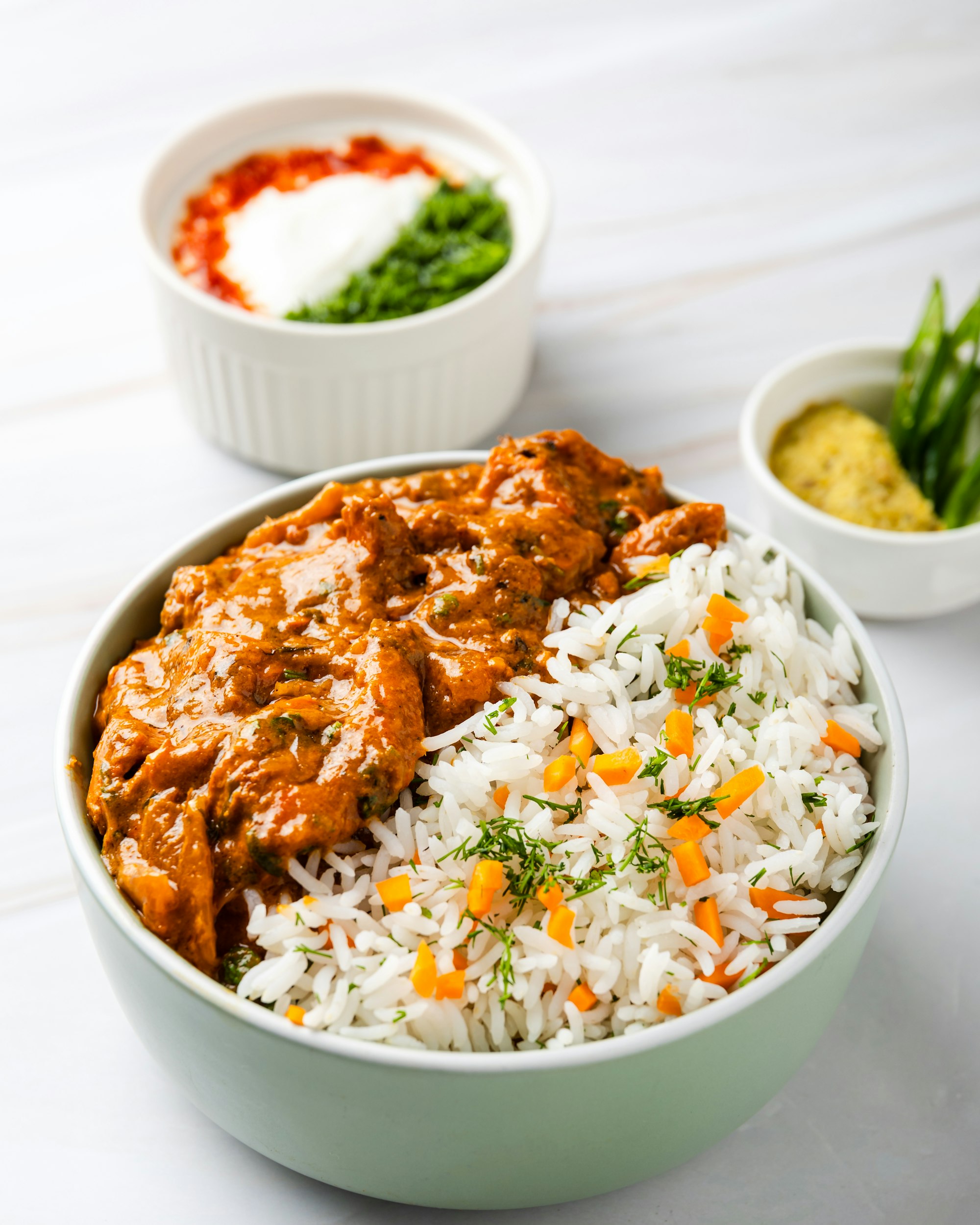
A Dish Invented to Use Up Leftovers
Butter chicken traces back to the 1950s at Moti Mahal, a restaurant in Delhi run by Punjabi refugees who had brought tandoor cooking with them from Peshawar. The story, widely repeated by food historians, is that the kitchen didn't want tandoori chicken to dry out or go to waste overnight, so cooks simmered leftover pieces in a tomato, butter, and cream sauce to keep them moist for the next day's service. What started as a practical fix for leftovers became the restaurant's signature dish, and eventually one of the most exported Indian recipes in the world.
What "Makhani" Actually Means
Makhani translates to "buttery," and it's not an exaggeration — the sauce is built on a genuinely high ratio of butter to other fats, finished with cream rather than yogurt. That's the core difference from most other North Indian gravies, which lean on ghee or oil as their primary fat. The butter isn't just richness for its own sake; it mellows the tomato's acidity and rounds out the garam masala's warmth into something smoother and less sharp than a typical curry base.
Butter Chicken vs. Chicken Tikka Masala
The two dishes get mixed up constantly, and the confusion is fair — both are tandoor-charred chicken finished in a creamy tomato sauce. The real distinction is in restraint: butter chicken leans on butter and a comparatively gentle spice hand, letting the tomato and dairy carry the dish, while tikka masala usually carries a more assertive garam masala backbone and a sharper tomato presence. Neither is a lesser version of the other — they're two different answers to a similar starting point.
Why the Chicken Comes Pre-Charred
Butter chicken never starts by poaching raw chicken directly in the sauce. The chicken is marinated in yogurt and spices, then roasted in a tandoor or under a hot broiler first, picking up a char that a simmered piece of chicken never develops. Only after that char is set does the chicken go into the makhani gravy to finish, which is why a well-made butter chicken still shows blistered edges on the meat even after it's been coated in sauce.
The Cashew Question
Many modern versions of the sauce include a cashew paste, blended in to add body and a subtle sweetness without needing more cream. It's a newer addition relative to the dish's original form, but it solves a real problem: cashew paste thickens the sauce and rounds out its texture without diluting the tomato's flavor the way extra cream can. Kitchens that skip it often rely on a longer reduction instead, cooking the tomato base down further to reach a similar consistency by a different route.
What to Look For on the Plate
A properly made butter chicken should have a sauce that's a deep orange-red, glossy rather than greasy, and thick enough to coat a piece of naan without running off immediately. The chicken should show visible char under the sauce, and the overall flavor should read as balanced — tomato first, then butter, then a gentle wave of spice, never one note overpowering the rest.
Try It at Gastro Bar and Restaurant
The North Indian kitchen chars its chicken in-house before finishing it in a slow-built makhani gravy of butter, tomato, and cream. See the North Indian menu or order online.