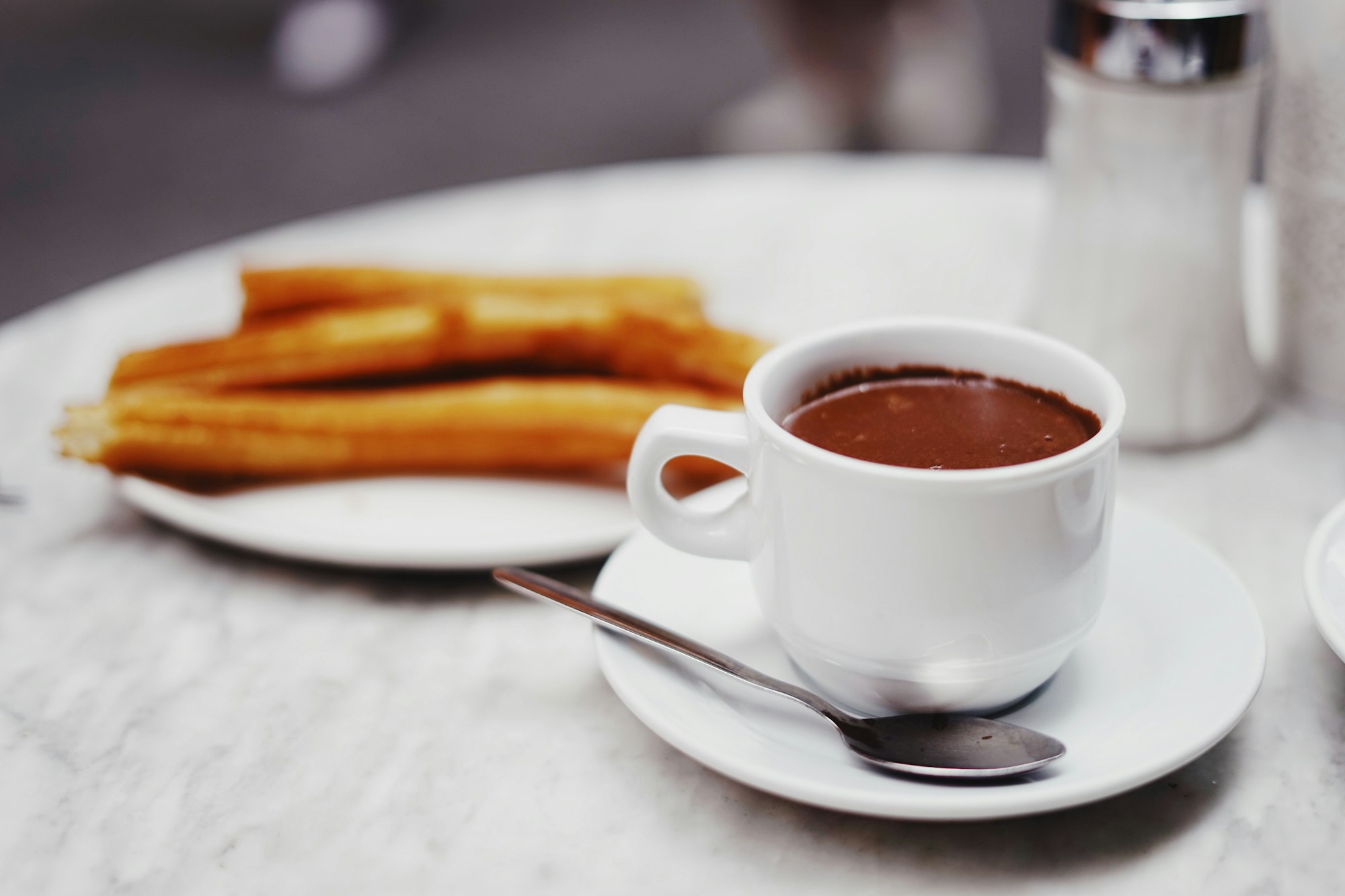
A Fried Dough With Spanish Roots and a Mexican Identity
Churros are widely believed to have Spanish origins, possibly adapted from a Portuguese or North African fried dough tradition, and brought to Latin America during colonization. Mexico is where the dish took on its now-iconic identity — thick, ridged, dusted in cinnamon sugar, and served alongside a cup of thick drinking chocolate for dipping. It's become so associated with Mexican street food and dessert menus that its more distant European history rarely comes up.
Choux Pastry Isn't Yeasted, and That's the Point
Unlike a doughnut, which relies on yeast to rise, churro dough is a variation on choux pastry — the same base used for eclairs and cream puffs — made by cooking flour into boiling water and butter before beating in eggs. There's no fermentation and no waiting for a rise; the dough puffs entirely from steam generated inside it during frying. That's why churros can go from mixing bowl to fryer in minutes, with none of the proofing time a yeasted dough would require.
Piping the Star Shape Isn't Decorative
The star-shaped ridges aren't just for looks — they dramatically increase the dough's surface area relative to its volume, which means more of it makes direct contact with hot oil and crisps. A churro piped through a plain round tip would fry with a much softer, less crackly exterior. The ridges also give the cinnamon sugar coating more surface to cling to once the churro comes out of the fryer.
Frying Temperature Decides Everything
Because choux pastry is mostly water, egg, and butter rather than a dense, gluten-heavy dough, it fries quickly — usually just a few minutes. Oil that's too cool lets the churro absorb excess grease before the surface sets, resulting in something heavy and soggy. Oil that's too hot browns the outside before the steam has fully cooked the interior, leaving a raw, pasty center under a dark crust. The right temperature produces a shell that shatters slightly on the first bite while the inside stays soft and custard-like.
Cinnamon Sugar's Timing Problem
Cinnamon sugar has to be applied while the churro is still hot enough for the surface oil to act as an adhesive — tossed too late, after the churro cools, the sugar just slides off instead of sticking. This is the same timing principle that governs salting french fries, applied to a sweet coating instead of a savory one: heat and residual oil are what make a coating stick evenly rather than clumping in spots or falling away entirely.
Chocolate Isn't a Garnish, It's a Component
The thick, almost pudding-like drinking chocolate served alongside churros in Mexico and Spain is deliberately different from a thin cup of cocoa — it's built to be dipped into and to cling to the ridged surface of the churro rather than run off. A properly made version should be dense enough to coat a spoon, working almost like a sauce rather than a beverage, which is why it's served in a small cup rather than a mug.
Try It at Gastro Bar and Restaurant
The Mexican kitchen fries churros to order and dusts them hot, served with a rich, dippable chocolate sauce. See the Mexican menu or order online.