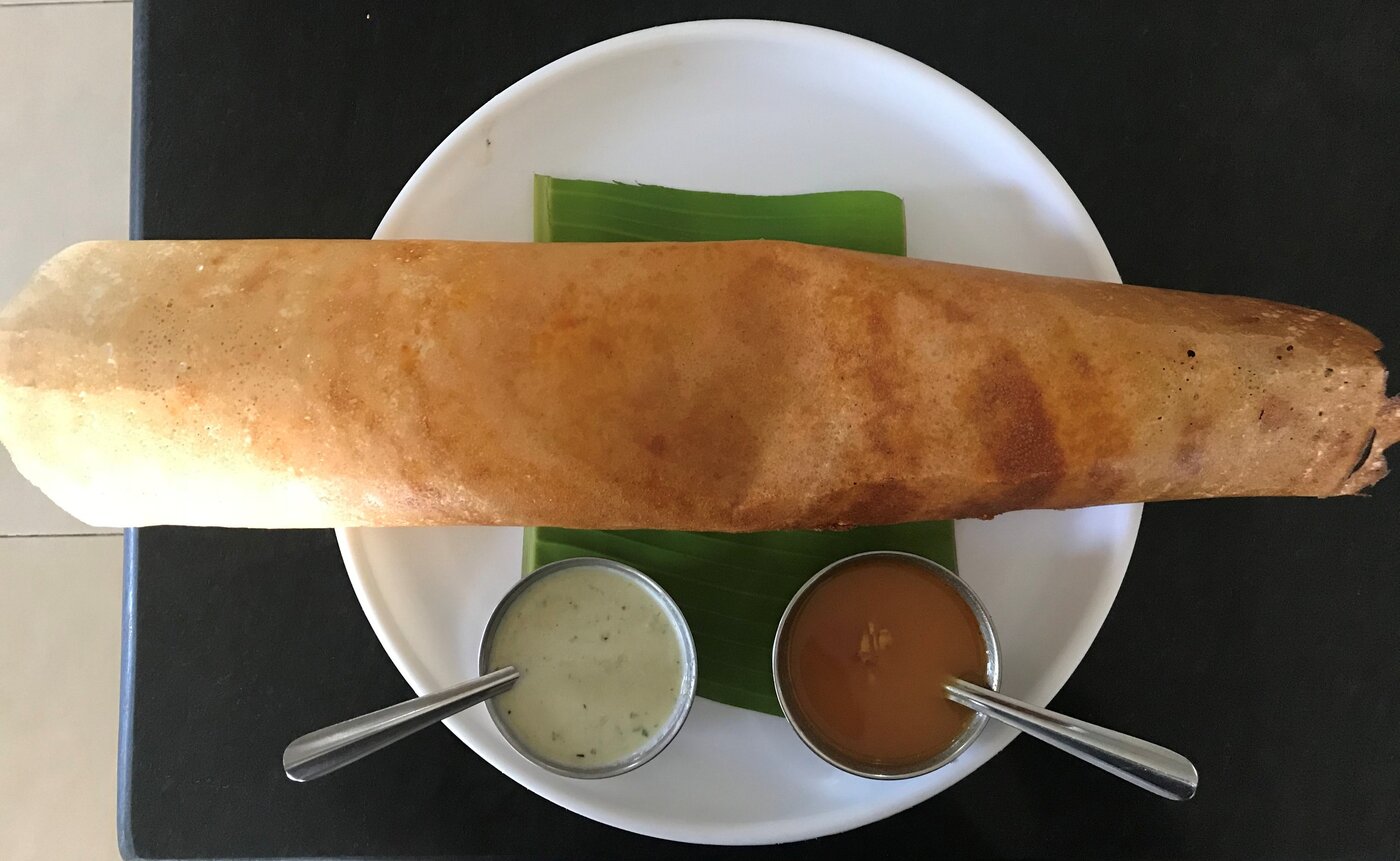
Not a Pancake, Not a Crepe
Dosa gets compared to both pancakes and crepes, but it's really its own thing — a thin, fermented rice-and-lentil batter cooked on a hot griddle until it turns crisp and lacy at the edges. It's a staple of South Indian cooking, distinct from the richer curries and rice dishes more associated with the north, and it rewards a completely different kind of technique.
The Fermentation Is the Whole Trick
Dosa batter is made from rice and urad dal (black gram), soaked separately, ground, and left to ferment overnight, often for as long as twelve hours depending on the ambient temperature. That fermentation does two things: it develops a subtle tang through natural lactic acid bacteria, and it produces the air bubbles that give a well-made dosa its characteristic crisp, slightly blistered texture once it hits the griddle.
The Griddle Technique
Spreading the batter is its own skill — a thin, even layer poured from the center outward in a spiral motion, using the back of a ladle to thin it further without tearing. Too thick and it stays soft and pale; too aggressive with the spreading and it tears before it ever crisps. A well-seasoned cast iron or steel griddle, kept at a consistent temperature, is what allows a cook to repeat this successfully, order after order.
Masala Dosa vs. Plain Dosa
A plain dosa is just the crepe, served with chutney and sambar for dipping. A masala dosa adds a filling of spiced, mashed potato — usually tempered with mustard seeds, curry leaves, and turmeric — before it's folded into its signature cylindrical shape. It's the most widely recognized version outside India, and the one most people mean when they say "dosa."
Sambar and Chutney Aren't Optional
Sambar, a tangy lentil-and-vegetable stew, and coconut chutney aren't garnishes — they're built to complete the dish. The chutney adds richness and coolness against the dosa's crisp tang, while sambar adds warmth and heartiness that turns the dish into a full meal rather than a snack.
What to Listen For
A properly cooked dosa makes an audible crackle when you break it — a sign the batter fermented correctly and the griddle was hot enough to crisp it through evenly. A dosa that bends without a sound is usually undercooked or under-fermented, and won't have developed the full flavor the process is designed to build.
Try It at Gastro Bar and Restaurant
See what's currently on offer at Gastro Bar and Restaurant. View the full menu or order online.