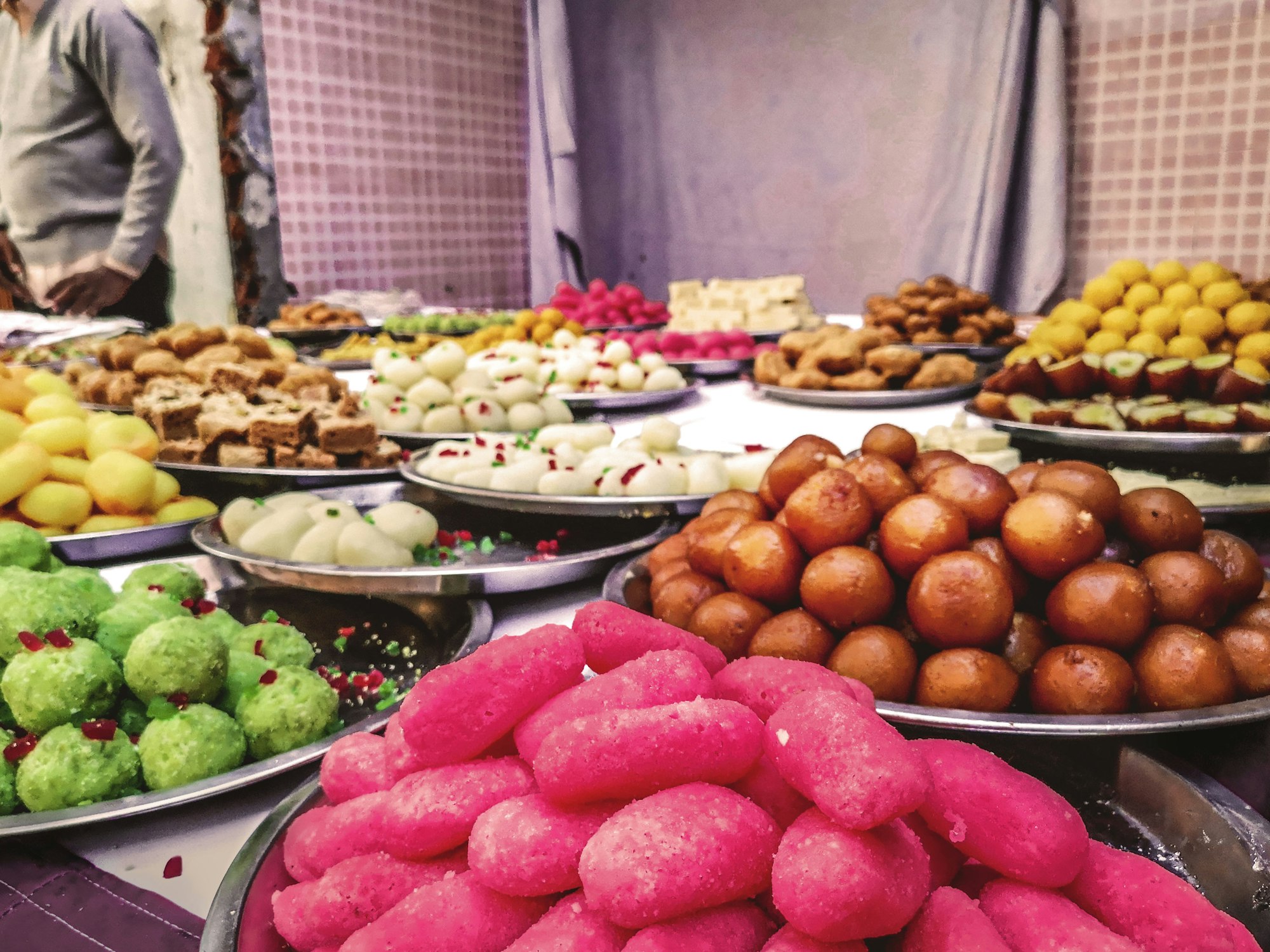
A Dessert That's Basically Fried Milk
Gulab jamun's name gives away half its identity — "gulab" refers to the rosewater-scented sugar syrup it's soaked in, while "jamun" refers to a dark, round Indian fruit the fried dough balls resemble in color and shape. Despite looking like a simple fried dough, the base isn't flour-and-water dough at all — it's built primarily from khoya, milk that's been slowly reduced until nearly all its water has cooked away, leaving behind a dense, slightly grainy solid.
Khoya: The Ingredient That Makes It Work
Khoya is what gives gulab jamun its rich, almost caramelized dairy flavor, a taste that a flour-heavy dough could never replicate on its own. Making khoya traditionally takes hours of slow stovetop reduction, stirring milk continuously as it thickens and darkens. A small amount of flour or milk powder is typically added to the khoya to help bind it into a workable dough, but the flavor and texture are overwhelmingly driven by the reduced milk itself, not the binder.
Why It's Fried Low and Slow
Because the khoya dough already contains milk solids and some residual fat, it browns very quickly at high heat — often before the inside has cooked through. Gulab jamun is fried at a noticeably lower temperature than most fried foods, giving the dense interior time to cook evenly while the surface slowly develops an even, deep brown color rather than scorching. Rushing this step with hotter oil is one of the most common reasons homemade gulab jamun ends up burnt outside and raw inside.
The Syrup Soak Is a Timing Problem, Too
Freshly fried gulab jamun goes directly into warm sugar syrup while both the dough and the syrup are still hot — a temperature match that helps the dense fried balls absorb syrup evenly all the way through rather than just on the surface. Soaked too briefly, the center stays dry and dense; left too long, the balls can become oversaturated and start to fall apart. A properly timed soak, usually thirty minutes to a few hours, lets the syrup penetrate fully without dissolving the structure.
Cardamom and Rosewater
The syrup itself is rarely just sugar and water — cardamom pods and a small amount of rosewater are standard additions, contributing a floral, slightly perfumed quality that keeps the dessert from tasting purely sweet. Rosewater in particular is easy to overuse; too much and the dessert tastes soapy rather than fragrant, which is why it's added in small, careful amounts rather than a generous pour.
What a Good One Feels Like
A properly made gulab jamun should be soft enough to yield to gentle pressure from a spoon without falling apart, evenly browned with no burnt or pale patches, and saturated with syrup all the way to the center rather than just on the outside. It should taste rich and milky first, with sweetness and rosewater arriving as a finish rather than an overwhelming first note.
Try It at Gastro Bar and Restaurant
The North Indian kitchen makes gulab jamun from scratch, reducing its own khoya and soaking each batch in cardamom-rosewater syrup. See the North Indian menu or order online.