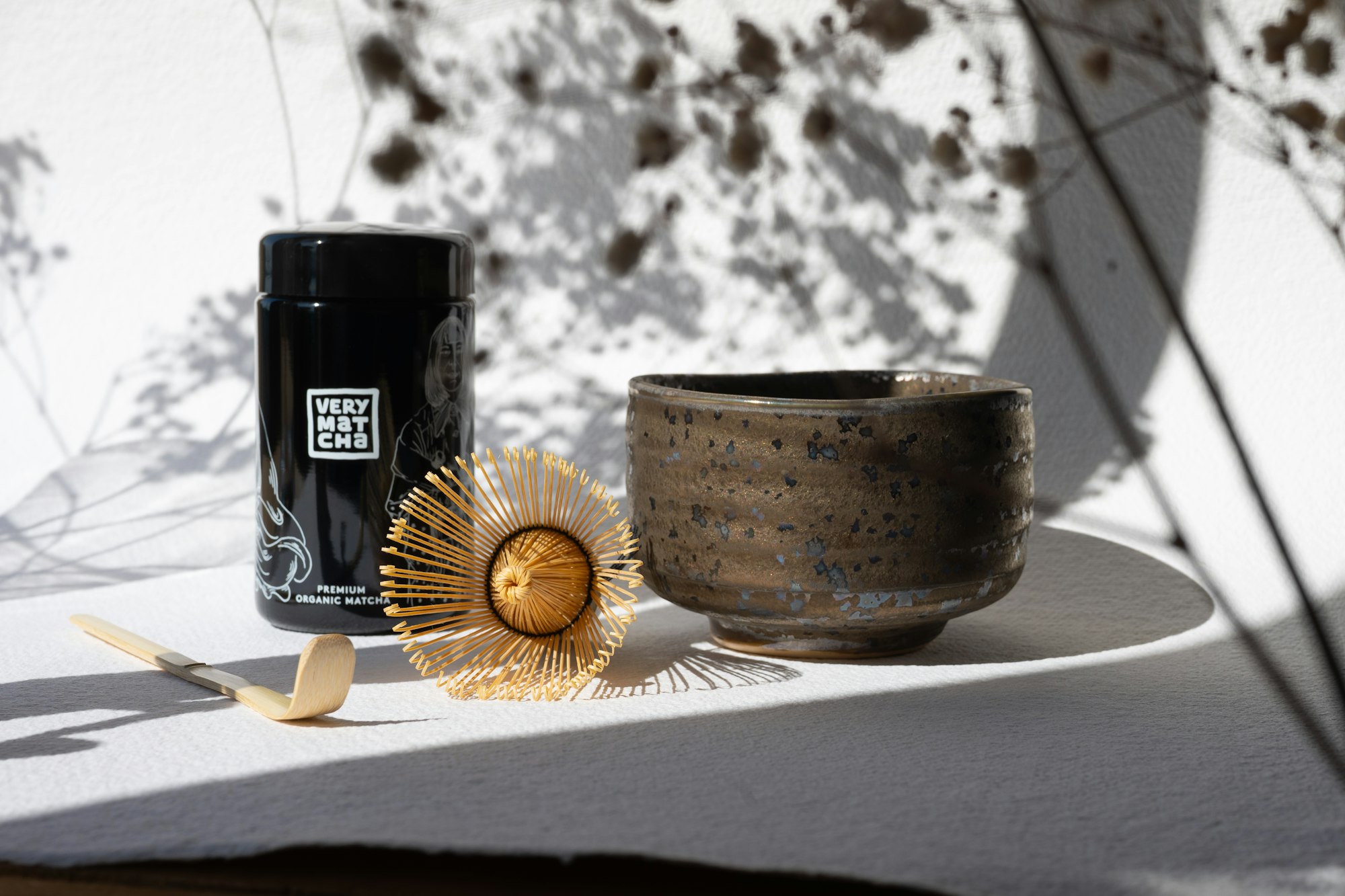
Two Different Ways to Get Tea Into a Cup
Most tea preparation methods fall into one of two categories: steeping whole or cut tea leaves in hot water and removing them, or consuming powdered tea directly, suspended in the liquid rather than filtered out. Matcha is the most widely known example of the second method, and it produces a noticeably different flavor and texture from anything steeped, not because the tea itself is different in kind, but because the preparation method changes what actually ends up in the cup.
What Matcha Actually Is
Matcha is made from tea leaves that are shade-grown for several weeks before harvest, a process that increases chlorophyll and amino acid content, then stone-ground into an extremely fine powder. Because the whole leaf is consumed rather than steeped and discarded, matcha delivers more caffeine and a fuller nutrient profile per serving than a typical steeped tea, along with a more vegetal, slightly grassy flavor that comes through more intensely than a steeped cup of the same plant.
Why Powder Changes the Chemistry
When tea is steeped, only the compounds that dissolve into hot water make it into the final drink — the leaf itself, along with insoluble fiber and some flavor compounds, gets left behind and discarded. Matcha skips that filtering step entirely, so everything in the leaf ends up in the final cup, which is part of why matcha tastes more concentrated and slightly bitter compared to a steeped green tea made from similar leaves.
Steeping Black and Oolong Tea Properly
Steeped tea has its own precision problem, just a different one than matcha. Black tea generally needs fully boiling water and several minutes to extract its full flavor, while a more delicate oolong or green tea steeped at the same temperature and time would turn bitter and astringent from over-extracted tannins. Getting steep time and water temperature matched to the specific tea is what separates a balanced cup from one that tastes either weak or harsh.
Why Boba Haven Steeps Rather Than Powders
Bubble tea bases are traditionally built from steeped tea — black, green, or oolong — rather than a powdered mix, because a properly steeped base carries a rounder, more layered flavor that stands up to milk, sugar, and toppings without disappearing underneath them. A powdered tea base is faster to prepare at scale, but it tends to taste flatter and more one-dimensional once milk and ice are added, which is why kitchens focused on quality over speed steep in small batches throughout the day instead.
How to Taste the Difference
A well-prepared matcha should taste vegetal and slightly sweet, with a smooth, almost creamy texture from the suspended powder rather than a thin, watery mouthfeel. A well-steeped black or oolong tea should taste rounded and full without bitterness, a sign the steep time and temperature were matched correctly to the leaf. If either tastes flat, chalky, or overly bitter, it's usually a sign of the wrong preparation method for that particular tea, not a flaw in the tea itself.
Try It at Gastro Bar and Restaurant
Boba Haven steeps its tea bases fresh throughout the day rather than relying on powdered mixes, from classic black milk tea to matcha. See the full boba menu or order online.