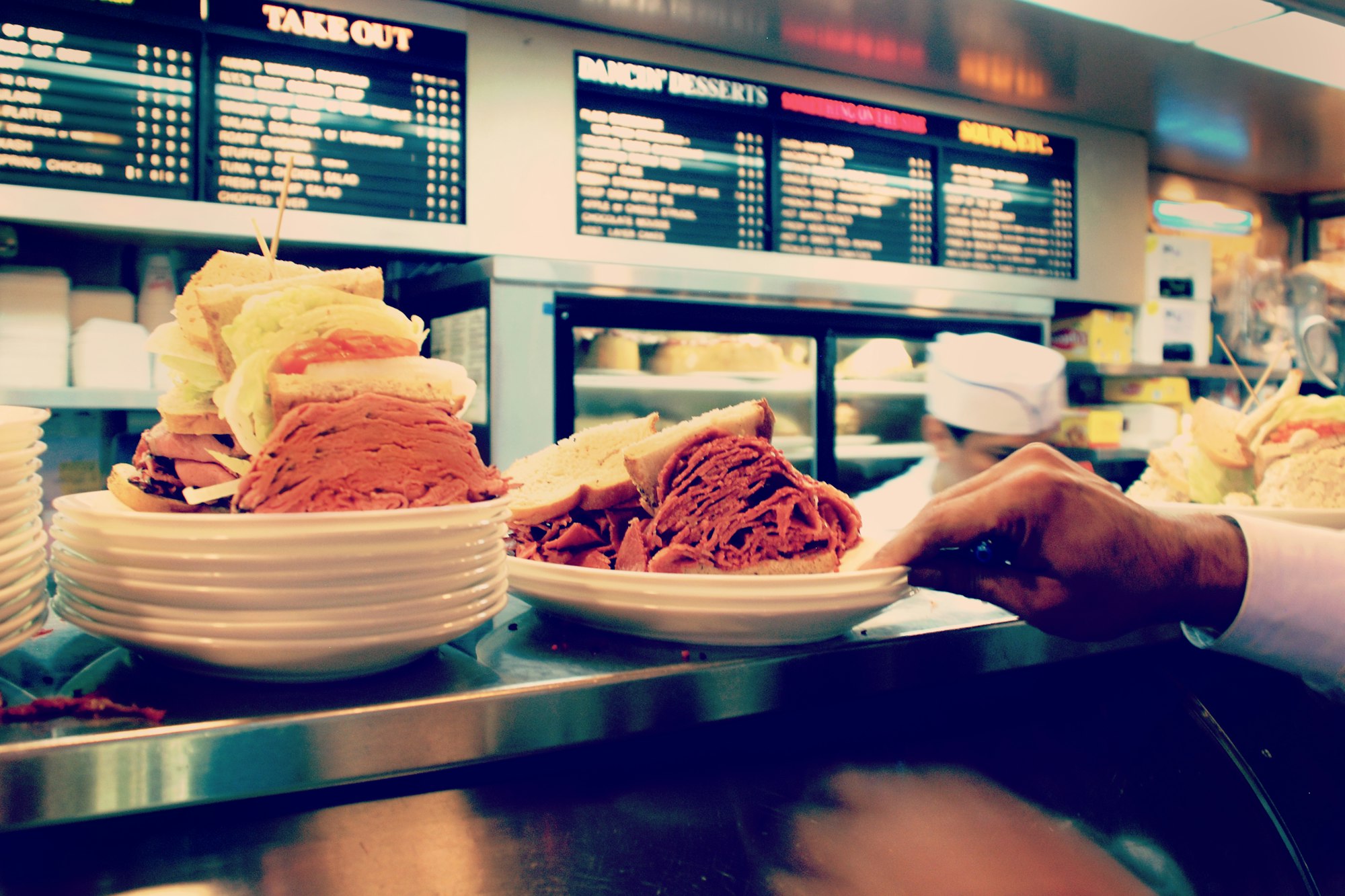
A Sandwich Built on a Preservation Technique
Pastrami began as a way to preserve beef before refrigeration was reliable, brought to New York largely by Romanian Jewish immigrants in the late 19th century. The technique — curing, seasoning, smoking, and steaming a tough cut of beef — was originally about extending shelf life, not building a delicacy. It became one anyway, and New York's version, built specifically around beef navel or brisket, is now considered a defining regional food in its own right, especially in a neighborhood like the Garment District with deep delicatessen roots.
Curing, Then Smoking, Then Steaming
Real pastrami is made in three distinct stages, and skipping any one of them changes the final product noticeably. First, the beef is cured in a brine with salt and curing agents for several days, the same process that turns brisket into corned beef. Second, it's coated in a heavy crust of coriander and black pepper and smoked low and slow for hours, developing the deep color and smoky flavor that separates pastrami from corned beef. Third, and often forgotten, it's steamed again just before slicing — a step that re-hydrates the meat and makes it tender enough to shred with a fork rather than requiring a serious knife.
Why Rye, Specifically
Rye bread's dense crumb and slightly sour tang exist for a practical reason: pastrami is fatty, salty, and intensely flavored, and a milder white bread would get overwhelmed and turn soggy under it. Rye's acidity cuts through the fat the same way pickles do on the side, and its sturdier structure holds up under a genuinely tall stack of meat without collapsing. A caraway seed studded through the crumb adds a slight anise note that echoes the pastrami's own peppery crust.
The Slice Matters More Than the Cure
Even perfectly cured, smoked, and steamed pastrami can be ruined by an inconsistent slice. It needs to be cut against the grain, thin enough to fold rather than tear when bitten, and stacked loosely enough that air pockets let the sandwich compress slightly under a bite instead of requiring a crowbar to get through. Cutting with the grain, a common mistake, results in long, stringy pieces of meat that pull apart awkwardly rather than yielding cleanly.
Mustard, Not Mayo — And There's a Reason
Deli mustard's sharp acidity plays the same role rye bread does: cutting through pastrami's fat and salt rather than adding more richness on top of it. Mayonnaise, by contrast, would compound the fattiness instead of balancing it, which is why it's essentially never paired with a properly made pastrami sandwich in a traditional deli. A thin, even layer of spicy brown mustard is doing real textural and flavor work, not just adding tang for its own sake.
What to Look For
A well-made pastrami slice should show a distinct pink smoke ring just under the peppery crust, a sign it was properly smoked rather than just boiled or steamed with liquid smoke added afterward. It should pull apart easily with a light tug, not require aggressive chewing, and the pepper-coriander crust should still have some visible texture rather than having steamed away entirely.
Try It at Gastro Bar and Restaurant
The American kitchen cures, smokes, and steams its pastrami in-house, sliced fresh to order on rye. See the American menu or order online.