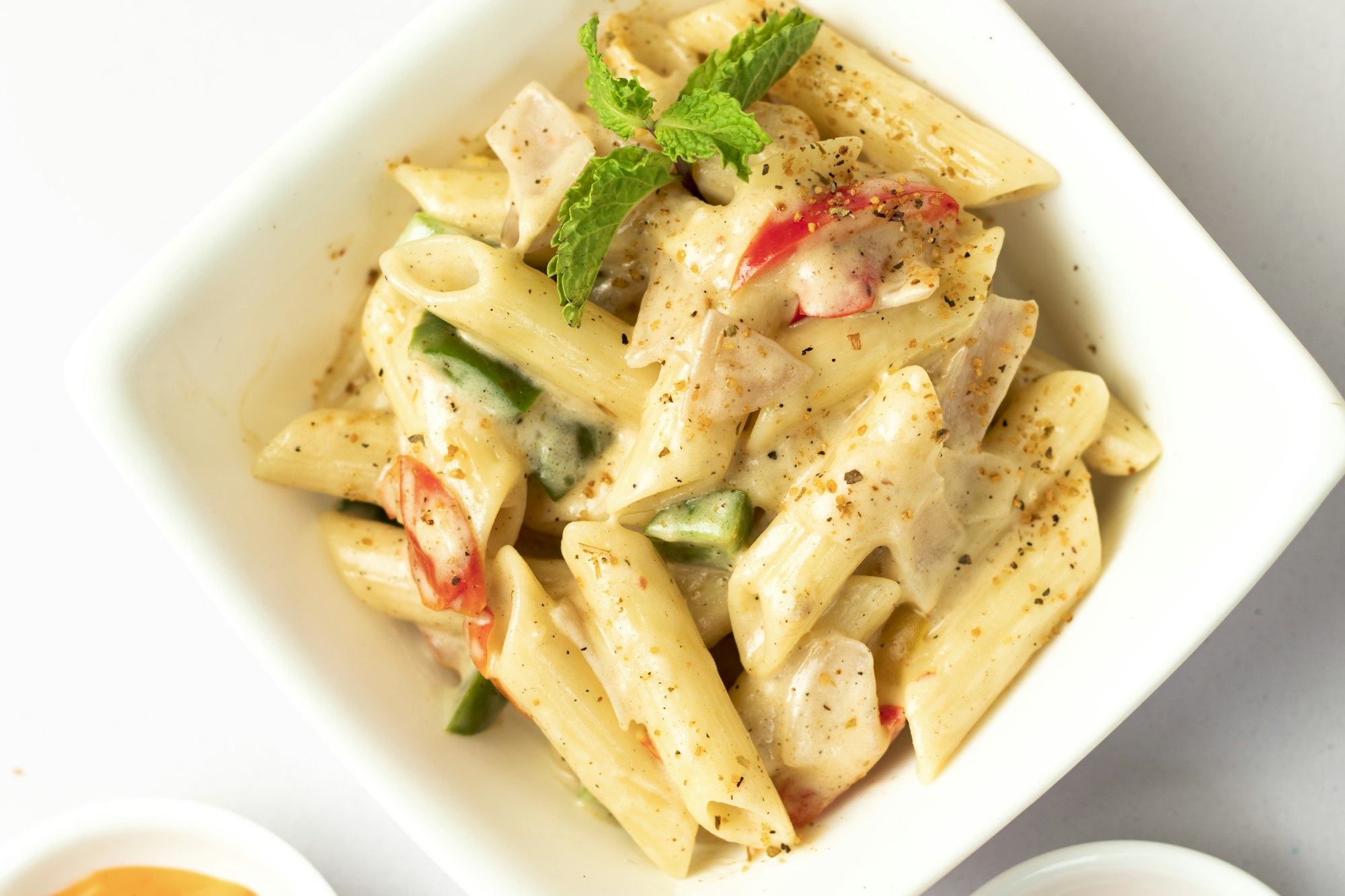
An Italian-American Dish With a Contested Origin
Despite its name, penne alla vodka has no clear roots in Italy itself — most food historians place its invention in Italian-American kitchens in the 1970s or 80s, with several New York restaurants separately claiming to have created it first. Wherever it started, it became one of the most ordered pasta dishes in the country almost immediately, likely because it sits in a comfortable middle ground between a simple marinara and a heavier, cream-based sauce.
What the Vodka Actually Does
Vodka isn't in the dish for flavor in the way people assume — it's there because alcohol dissolves certain aromatic compounds in tomatoes that neither water nor fat can access on their own. Tomatoes contain both water-soluble and fat-soluble flavor compounds, and alcohol acts as a bridge between the two, pulling out notes that a sauce made only with olive oil and cream would leave behind. Most of the alcohol cooks off during simmering, so the dish isn't meant to taste boozy — it's meant to taste like a more complete version of tomato than usual.
Why Cream Alone Isn't Enough
A sauce built from just tomato and cream tends to taste either sharp or flat, depending on the ratio — the acidity and the richness don't fully integrate without something to bridge them. The vodka's role, alongside a slow reduction, is to help emulsify the tomato's acid into the cream's fat so the two read as one unified sauce rather than two ingredients sitting side by side. A rushed vodka sauce, where the cream is added too soon, often separates or tastes broken for this exact reason.
The Reduction Matters More Than the Recipe
The technique that actually separates a good vodka sauce from a mediocre one isn't the vodka-to-cream ratio — it's how long the tomato base is reduced before the cream and vodka go in. A properly reduced tomato base has concentrated, less watery flavor, which means the finished sauce clings to pasta rather than pooling thin at the bottom of the bowl. Skipping this step and rushing straight to the cream is the most common reason a home version tastes noticeably different from a restaurant one.
Why Penne, Specifically
Penne's ridged, tube shape is built to trap a sauce with some body and a bit of thickness — exactly what a properly reduced vodka sauce has. A thinner sauce would slide off the ridges; a chunkier one would clog the tube. Vodka sauce sits in the narrow middle ground where penne's structure actually does its job, which is part of why the pairing became the standard rather than an arbitrary choice.
What Separates a Good Vodka Sauce From a Great One
A great vodka sauce should look pale orange-pink rather than either bright red or muddy brown, a sign the tomato and cream actually emulsified rather than just being stirred together. It should taste balanced — tomato first, a warm background note from the vodka, and richness that rounds things out rather than dominating. If it tastes like straight cream with a faint tomato tint, the reduction step was likely skipped.
Try It at Gastro Bar and Restaurant
The Italian kitchen reduces its tomato base slowly before finishing penne alla vodka with cream, the traditional way. See the Italian menu or order online.