Why a Bad Pour Ruins a Good Beer
A beer's flavor isn't fixed the moment it leaves the brewery — carbonation, temperature, and foam all change how the same liquid tastes once it hits a glass. A rushed or careless pour can leave a beer overly gassy, flat, or muted, even if the beer itself was made correctly. This is part of why the same draft beer can taste noticeably different from one bar to another, despite coming from an identical keg.
The Angle Matters More Than the Speed
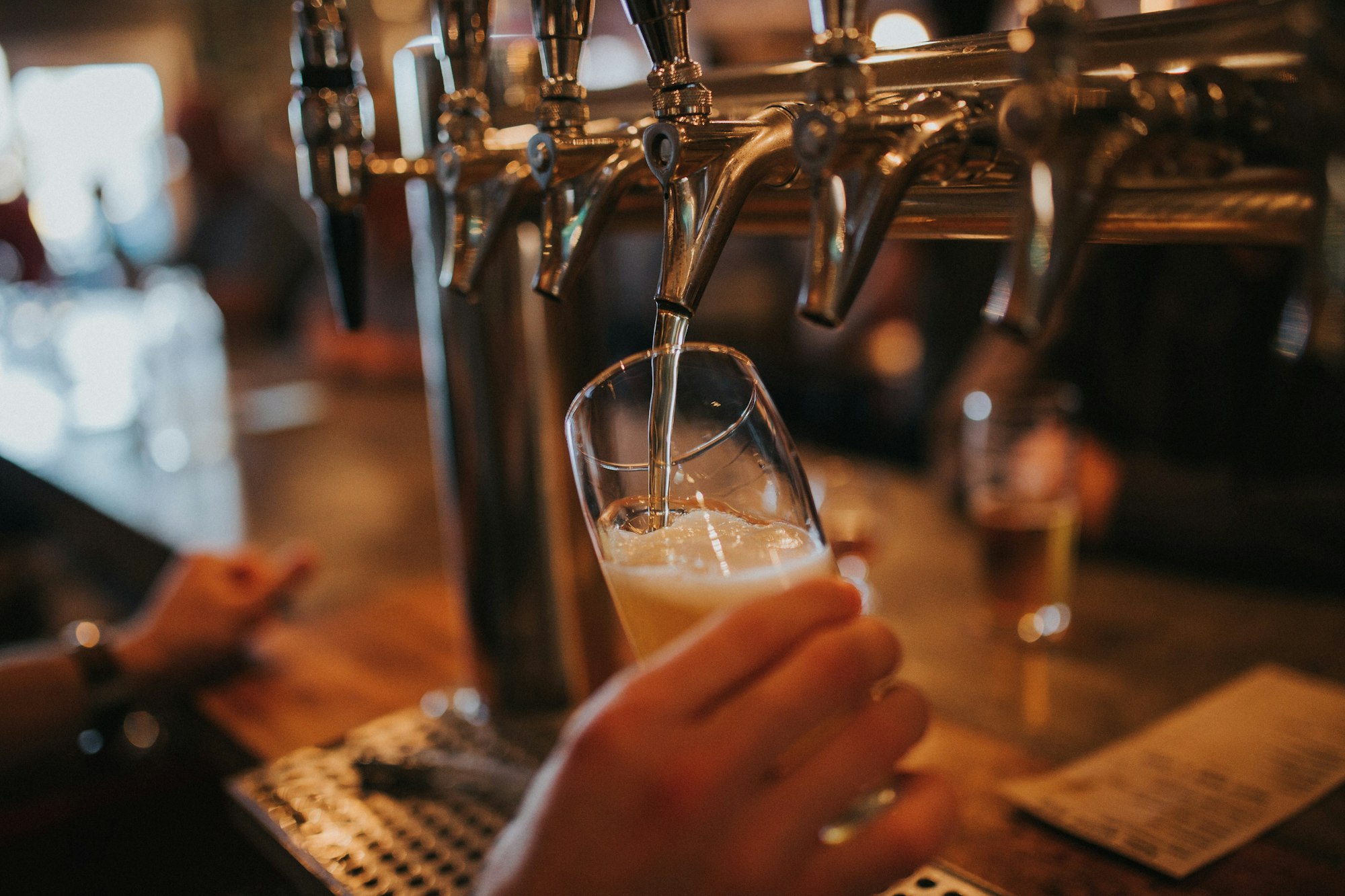
The classic technique — tilting the glass at roughly 45 degrees and gradually straightening it as it fills — isn't just tradition, it's about managing how much the beer agitates on its way in. Pouring straight down into an upright glass creates excess turbulence, which knocks too much carbon dioxide out of solution at once, leading to a beer that goes flat faster and develops an unstable, quickly collapsing foam. The angled pour lets the beer flow gently down the glass wall instead of crashing into the bottom.
Foam Isn't the Enemy
A common bar mistake is treating foam as something to eliminate entirely. A proper head — usually around one to two fingers, depending on the style — actually protects the beer underneath, trapping aromatics and slowing the rate at which carbonation escapes into the air. A completely flat pour with no foam at all often tastes duller and goes stale in the glass faster than one with a modest, stable head sitting on top.
Line Cleaning: The Unglamorous Secret
Even a perfect pour technique can't fix a dirty beer line. Draft lines accumulate yeast residue, mineral buildup, and bacteria over time, all of which can introduce off-flavors — commonly described as sour, musty, or metallic — into an otherwise well-made beer. Industry standards generally call for line cleaning every two weeks, a step that's invisible to the customer but has more impact on flavor than almost any other variable behind the bar.
Glassware Isn't Just for Show
Different glass shapes are built to manage carbonation and aroma differently — a tall, narrow pilsner glass helps maintain a beer's carbonation and showcase its color, while a wider tulip-shaped glass is designed to concentrate aroma for more fragrant styles. Pouring a delicate pilsner into the wrong shape of glass can genuinely mute characteristics the brewer intended to be front and center.
Nitrogen vs. CO2
Most beers are carbonated and served using pressurized carbon dioxide, which produces the sharp, prickly bubbles associated with a typical lager or IPA. Nitrogen, used for styles like stout, creates smaller, denser bubbles and a noticeably creamier, cascading pour — a visibly different physical process that changes the beer's texture on the tongue, not just its appearance in the glass.
Try It at Gastro Bar and Restaurant
The bar keeps its lines cleaned on schedule and pours every draft beer at the angle and glass built for that specific style. See the Bar Menu or order online.