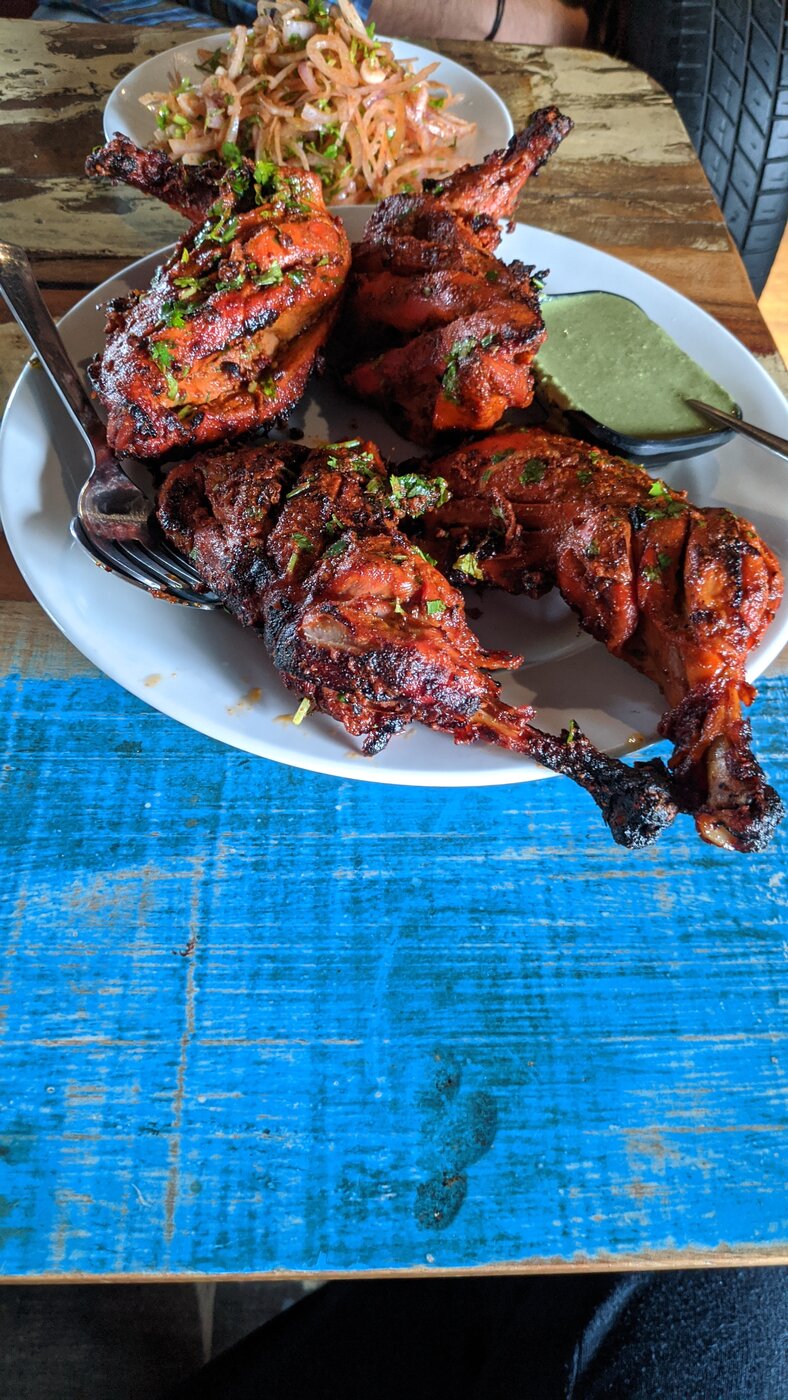
An Oven Older Than You'd Think
The tandoor — a cylindrical clay oven — has roots that stretch back thousands of years, with evidence of tandoor-like ovens found in Indus Valley civilization sites dating to around 3000 BC. The version used today in Punjab and across the Indian subcontinent was popularized more recently, in the mid-20th century, by restaurants in New Delhi, whose owners are often credited with turning a household cooking method into a restaurant standard.
Why Clay Changes Everything
A tandoor cooks with radiant heat from its clay walls, not just direct flame, reaching temperatures well above what a standard home oven can hit — often 600°F to 900°F. That intense, even heat sears the outside of marinated meat quickly, locking in moisture while the inside finishes cooking, which is why tandoori chicken comes out both charred and tender rather than dry. The clay itself also retains heat differently than metal, releasing it slowly and evenly rather than in the uneven bursts you'd get from an open flame.
The Marinade Does Real Work
Before anything goes into the tandoor, it spends hours — sometimes overnight — in a yogurt-based marinade with ginger, garlic, and a blend of spices. The yogurt isn't just flavor — its mild acidity helps tenderize the meat by gently breaking down proteins, and the fat helps the spice blend adhere and caramelize under high heat rather than burning off before it can develop flavor.
The Skewer Matters Too
Meat destined for the tandoor is typically threaded onto long metal skewers and lowered vertically into the oven, allowing heat to circulate on all sides simultaneously. This vertical cooking position is part of why tandoori meats develop such an even char — there's no single side facing the heat source the way there would be on a flat grill.
Not Just for Meat
The same oven bakes naan, which gets slapped directly onto the tandoor's inner wall, puffing up and developing char spots in under a minute thanks to the intense, close-range heat. Vegetables and paneer take well to the tandoor too, picking up the same smoky char as meat, which is why tandoori paneer tikka has become a menu staple in its own right.
Try It at Gastro Bar and Restaurant
The North Indian kitchen roasts tandoori chicken, murgh tikka, and fresh naan the traditional way, marinated overnight and finished in a true tandoor. See the North Indian menu or order online.