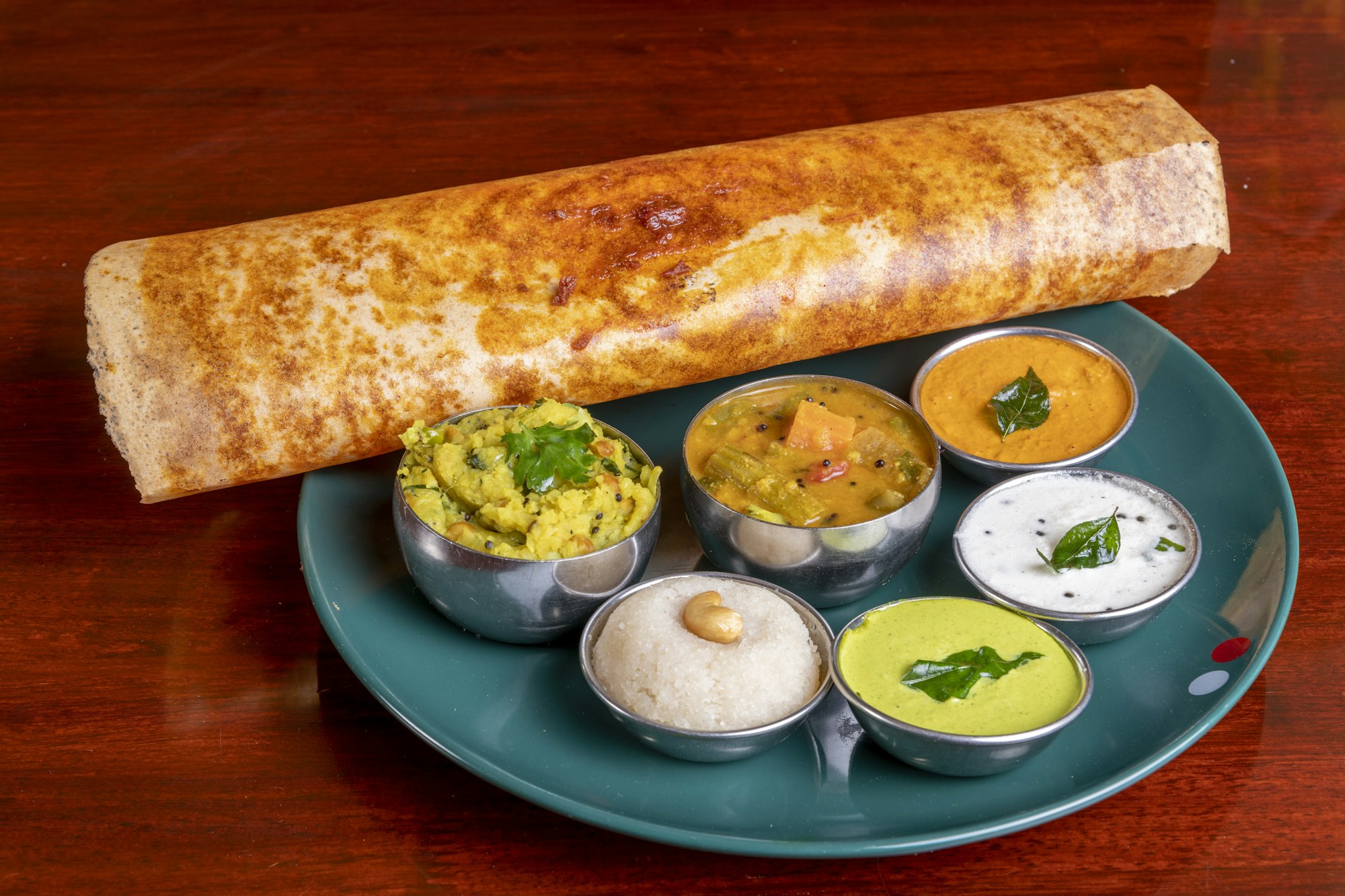
The Third Member of the Fermented-Batter Family
Dosa and idli tend to get most of the attention, but uttapam comes from the exact same fermented rice-and-lentil batter — the difference is entirely in how it's cooked and finished. Where dosa is spread thin and crisped, and idli is steamed in molds, uttapam is poured thick onto a griddle and left to cook slowly, more like a pancake than a crepe. It's a staple across South India, though it's often overshadowed on menus outside the region by its more famous relatives.
A Thicker Batter, A Different Cook
The same fermented batter used for dosa is simply left less diluted for uttapam, giving it enough body to hold its shape as a thick round rather than spreading paper-thin across the griddle. It's cooked slower and at a lower temperature than dosa, which needs high heat for a quick crisp. Uttapam is given time for the inside to cook through fully while the underside develops a light golden color, rather than the deep, lacy crispness that defines a proper dosa.
Toppings Change the Dish, Not Just the Flavor
What really separates uttapam from a plain rice pancake is that its toppings — chopped onion, tomato, green chile, cilantro, sometimes grated carrot — are pressed directly into the batter while it's still raw on the griddle, not added afterward. That timing matters: the vegetables cook into the batter as it sets, becoming part of the structure rather than sitting on top of it. A properly made uttapam shows its toppings slightly caramelized and fused into the surface, not loose or falling off.
Why It Doesn't Get Folded
Dosa is thin and pliable enough to fold or roll around a filling. Uttapam's thickness makes that impossible, and it isn't meant to be handled that way in the first place — it's served flat, cut into wedges, and eaten with sambar and chutney the way dosa is, but as a standalone round rather than a wrapper. The thickness is the whole point: it gives uttapam a softer, more bread-like chew that a thin dosa never develops.
Uttapam vs. Pizza (A Comparison Worth Making)
The comparison to pizza gets made often, and it holds up better than it sounds — a round, toppinged base cooked until the underside crisps while the top stays soft. The real difference is fermentation: uttapam's batter ferments overnight through natural bacteria, giving it a mild tang that a pizza dough's yeast doesn't produce in the same way. It's a genuinely different flavor profile built from a similar structural idea.
What a Good Uttapam Should Look Like
The underside should be golden brown with the toppings visibly caramelized into the surface, not pale or soggy. The inside should be soft and slightly spongy, similar to idli's texture but denser, with a tang from the fermentation coming through clearly. If it tastes flat or the toppings taste raw rather than lightly cooked, the batter likely wasn't given enough time on the griddle to cook all the way through.
Try It at Gastro Bar and Restaurant
The South Indian kitchen ferments its batter fresh in-house and finishes uttapam with onion, tomato, and chile pressed straight into the griddle. View the full menu or order online.