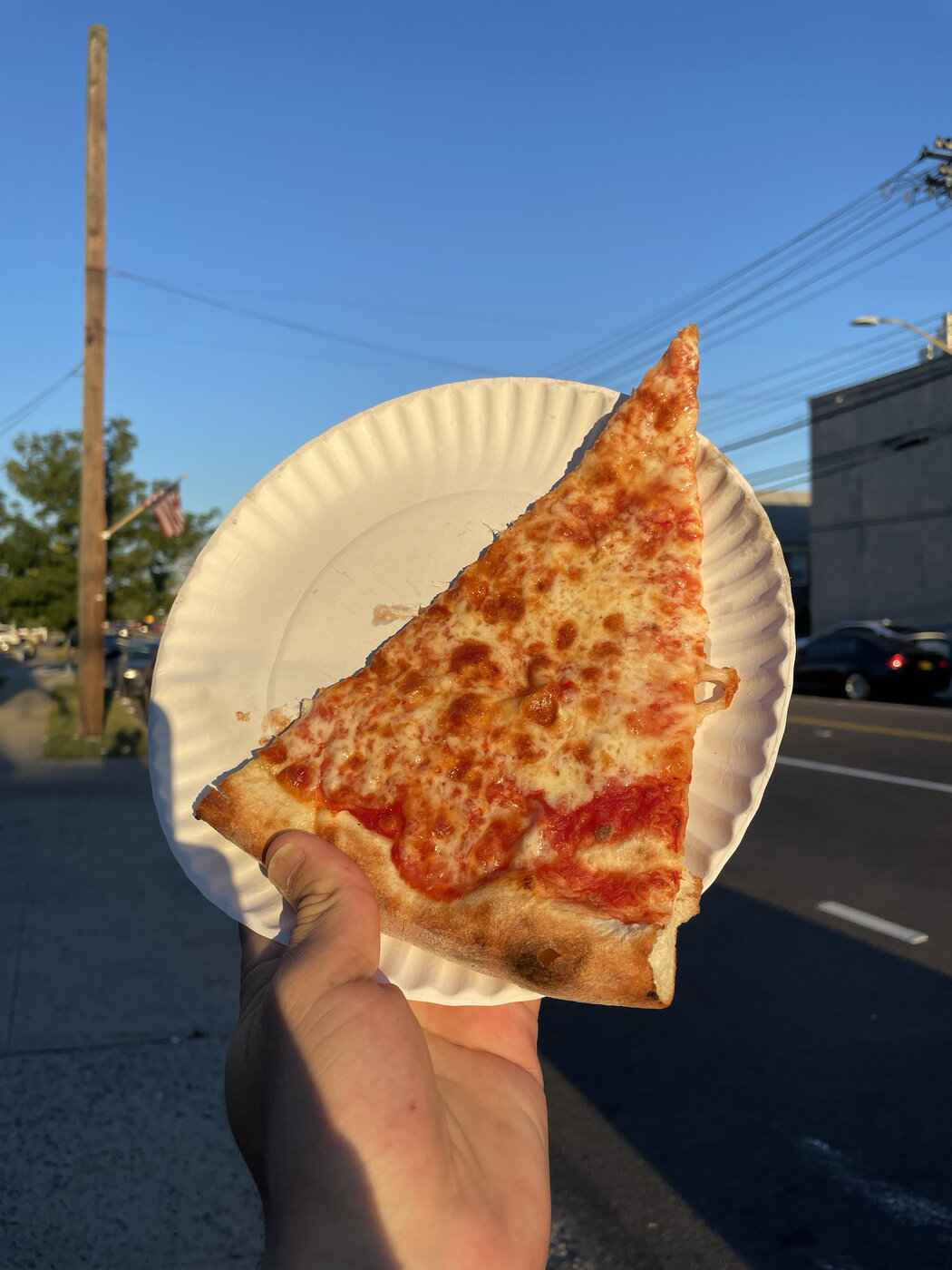
A Slice With a Point of View
Ask anyone who grew up in the city and they'll tell you: New York pizza isn't just a regional variation, it's practically its own food group. Wide, foldable slices with a thin, crisp-yet-pliable crust, a light layer of low-moisture mozzarella, and a bright, slightly sweet tomato sauce — that's the formula, and it hasn't changed much since Italian immigrants started baking it in coal-fired ovens on the Lower East Side in the early 1900s.
Why the Crust Behaves Differently
Ask a pizzaiolo and they'll point first to the water. New York tap water has a mineral profile that many bakers swear affects gluten development, giving the dough its particular chew. More provable is the technique: NY-style dough is proofed slowly, often for a full day or more, which develops flavor without over-strengthening the gluten. The result is a crust sturdy enough to hold toppings but flexible enough to fold in half — the single most identifiable trait of the style.
Coal, Then Gas
The earliest New York pizzerias used coal-fired ovens, which run extremely hot and char the crust in spots. Health and safety regulations eventually pushed most shops toward gas ovens, which run a bit cooler and more evenly. Old-school coal-oven spots are now a point of pride precisely because they're rare, and the char they produce is genuinely different from anything a gas deck oven can replicate.
The Sauce Is Deliberately Simple
Unlike heavily reduced, herb-heavy sauces found elsewhere, a proper New York sauce is often uncooked or barely cooked — crushed tomatoes, salt, maybe a touch of oregano, spread raw onto the dough and left to cook through in the oven's heat. This keeps the sauce bright rather than muddy, and prevents it from oversaturating the crust before it even bakes.
The Cheese Matters More Than You'd Think
Low-moisture, part-skim mozzarella is the standard for a reason: it melts evenly, browns in small, appealing spots rather than large scorched patches, and doesn't release excess water onto the crust the way fresh mozzarella can. Fresh mozzarella has its place on specialty pies, but for a classic slice, low-moisture is the technically correct choice.
The Fold Test
Locals judge a slice by whether it holds its shape when folded lengthwise. A properly made New York slice bends without cracking or drooping — a small technical detail that says a lot about how the dough was made and how long it rested. A slice that flops from the tip means the dough was likely underproofed or rolled too thin at the center.
Try It Yourself
Gastro Bar and Restaurant's Italian kitchen bakes pies the traditional way — hand-tossed, thin crust, real mozzarella — alongside a full pasta menu for anyone who wants Italian food beyond the pie. See the Italian Menu or order a pie online.